Gin is a flavored spirit with a juniper legal spine. Buy for how botanicals behave under tonic, vermouth, or citrus — not bottle art.
The big idea
Gin is a flavored spirit with a juniper legal spine — buy for how botanicals behave under tonic, vermouth, or citrus, not bottle art.
Keep these
5 things to remember
01
Juniper must be perceptible for it to be gin; everything else is house style.
02
London dry is the cocktail default — Beefeater, Tanqueray, or another juniper-led bottle you like.
03
Hendrick’s and similar contemporaries can be citrus- or floral-forward — great in G&Ts, riskier in a Negroni.
04
Tonic is a lengthener with bitterness; it reveals gin character instead of covering flaws.
05
Buy a London dry you like with a whisper of vermouth — not only with soda.
The rule
What the law actually requires
Styles that change Martini and Negroni behavior
London dry
Juniper · dry
Contemporary
Citrus · floral
Navy / overproof
Hot · holds citrus
Old Tom
Softer · historic
Gin is a distilled spirit flavored so that juniper is the predominant botanical character. That is the load-bearing rule — not “clear” and not “tastes like Christmas.”
Beyond juniper, producers build a botanical recipe: coriander, citrus peel, angelica, orris, and dozens of others. Those choices decide whether the gin reads piney, citrusy, floral, spicy, or soft.
02
London dry vs contemporary
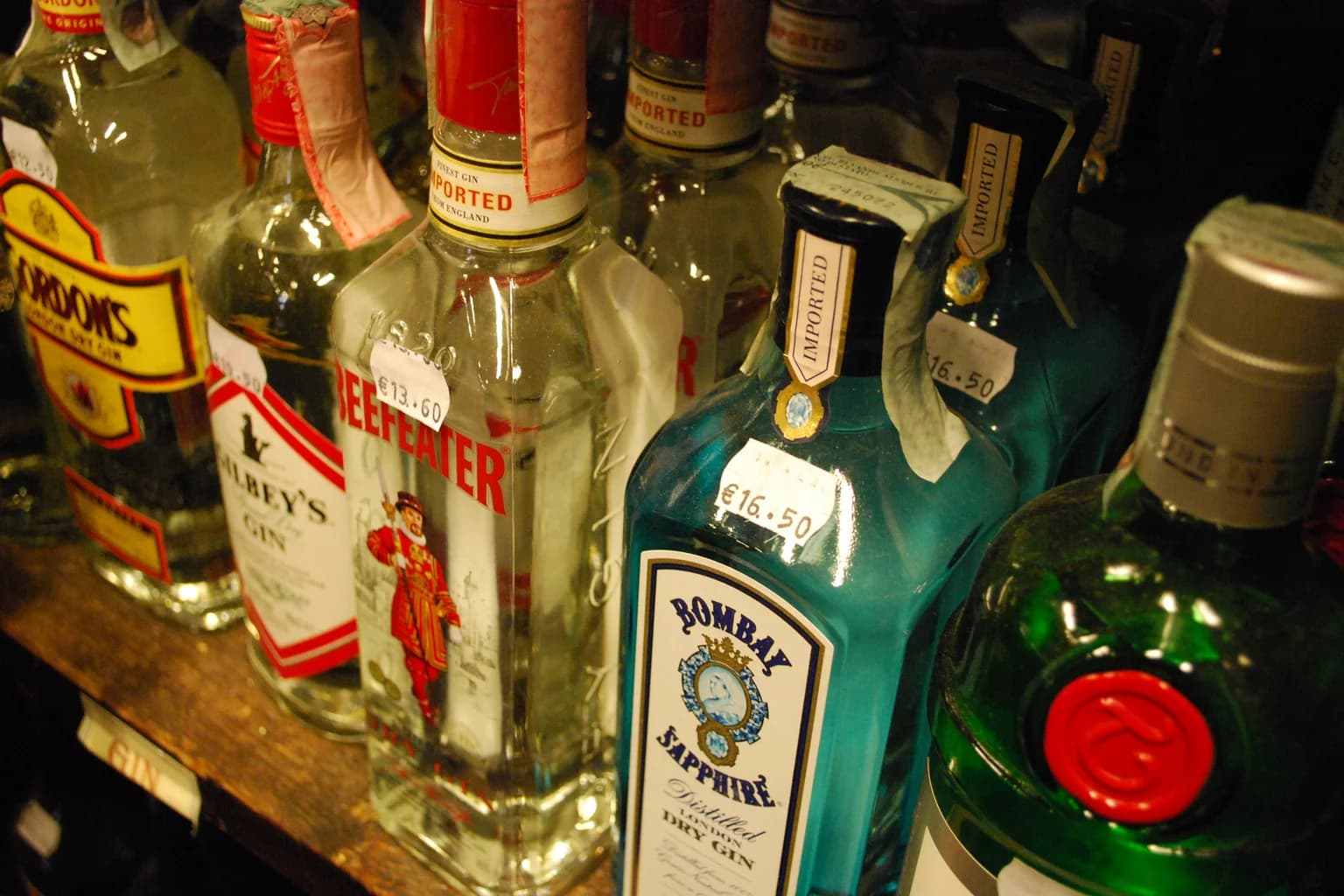
London dry is a production style, not a geography requirement: distilled with botanicals, no sweetening after distillation beyond a tiny allowance, and a dry profile. Beefeater and Tanqueray are the usual juniper-led home defaults — Martinis, Negronis, classic G&Ts. Another juniper-led London dry you already like does the same job.
Contemporary gins often push citrus, cucumber, floral, or spice notes. Hendrick’s is the familiar cucumber-floral example: brilliant in a G&T, riskier in a Negroni. Name the job honestly. Taste neat with a drop of water before you commit a whole bottle to equal-parts drinks.
Tip
A starter bottle
You do not need a gin library. One solid London dry — Beefeater, Tanqueray, or similar juniper-led — that you like with a whisper of dry vermouth covers Martinis, Negronis, Last Words, and most G&Ts.
Add Hendrick’s, or another cucumber-floral contemporary, when you want a brighter highball — not as a silent swap for the cocktail default. Navy strength and Old Tom can wait until a recipe or a sour asks.
Tip
Old Tom, navy strength, and genever — shopping footnotes
Old Tom is a slightly sweeter historic style — Hayman’s Old Tom is the usual shopping example. Useful in older recipes that assume a softer gin. “Navy strength” on a gin label is a shelf convention, not a protected category — bottles often sit near 57% ABV and hold citrus and sugar in sours; Plymouth Navy Strength is a measured tool, not a flex. Tanqueray bottled at export strength (~47%) is a smaller density step — still not a silent swap for 40% by the ounce.
Genever spans lighter jonge styles and more malt-forward oude or korenwijn bottles. Bols Genever is a familiar malt-forward example on a shelf. It is not a 1:1 London dry substitute. Production and history lessons unpack both.
05
Common mistakes
Martini tastes hollow after a G&T-only buy → start with a juniper-led London dry (Beefeater, Tanqueray, or similar) you like with a whisper of vermouth; add Hendrick’s later for the highball fork.
“Craft” or “small batch” treated as a quality score → ignore those words; shop London dry vs contemporary by how the botanicals behave under vermouth or tonic.
G&T goes flat in two minutes → pack the glass with ice and use fridge-cold tonic before you change the gin.
In the glass
Practice these
Read the drill, then make the drink once focusing on that cue — repetition beats another paragraph.