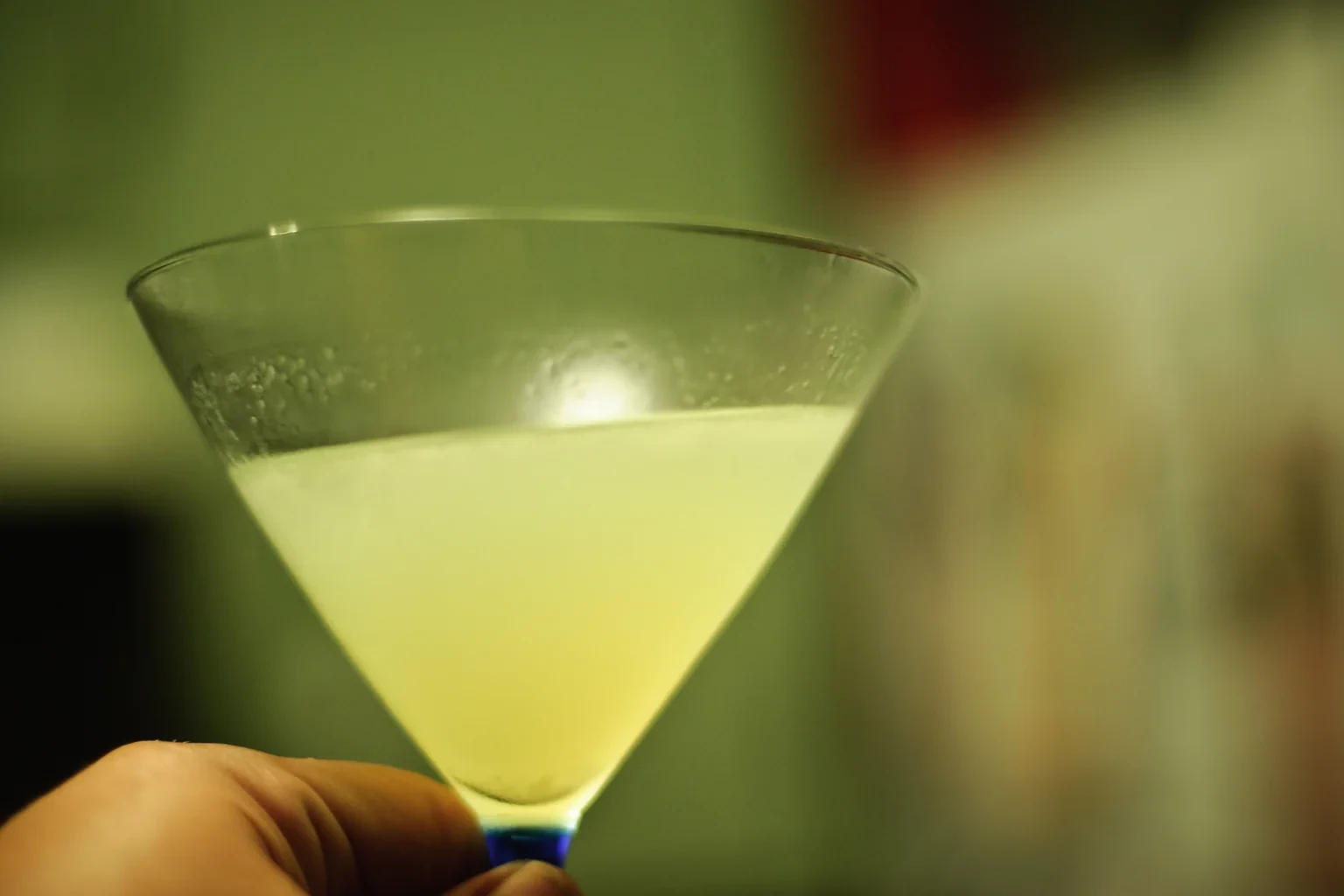
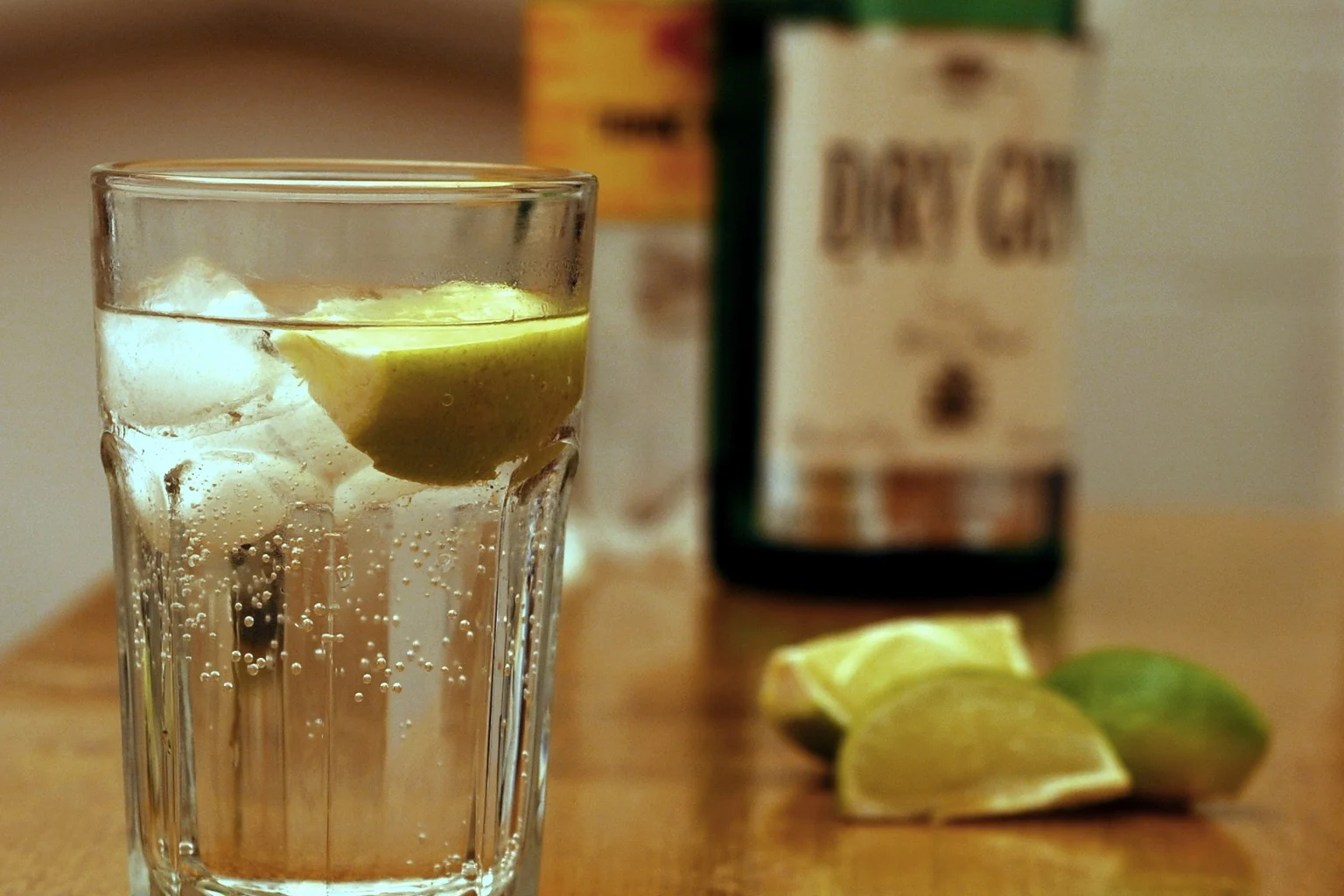
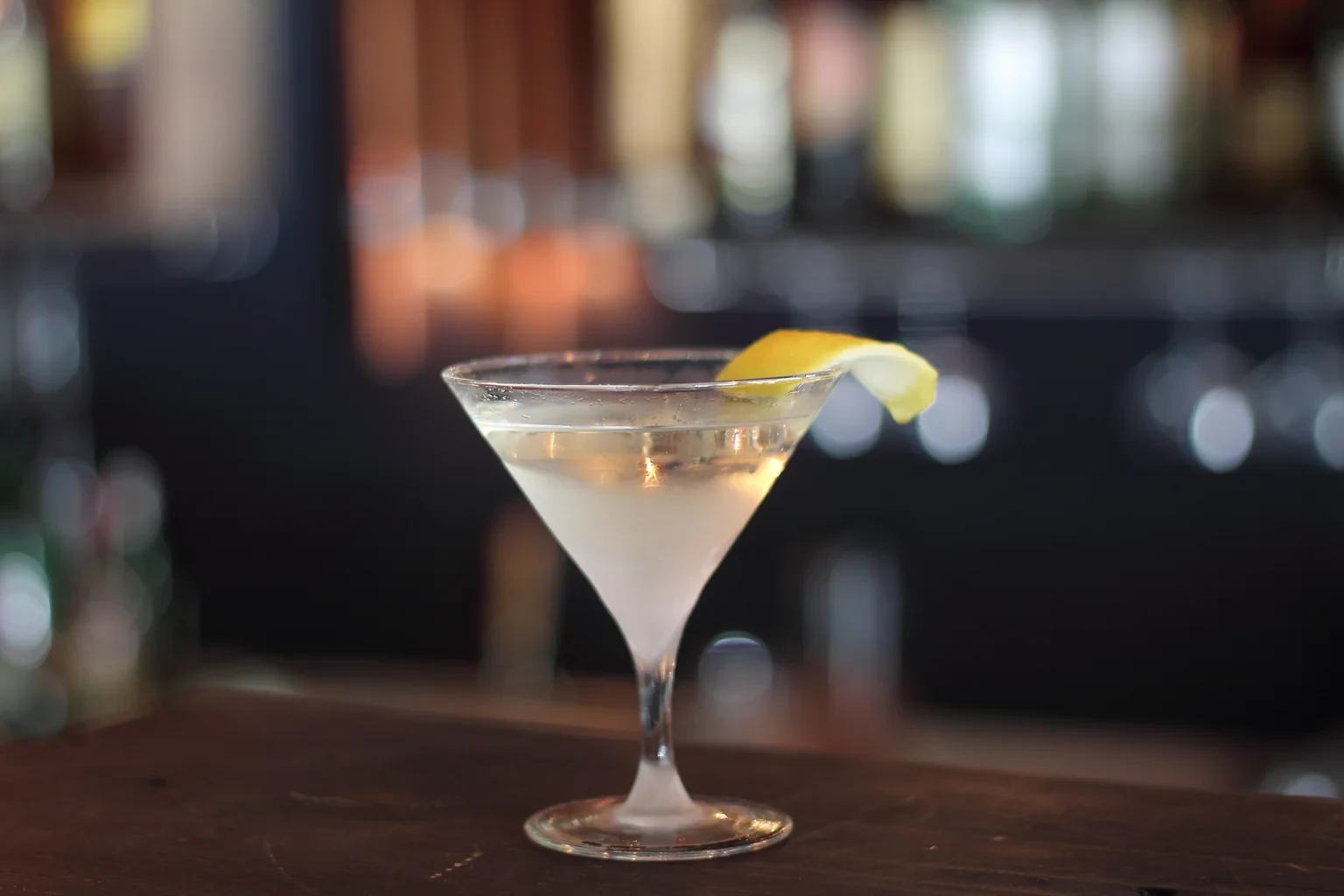
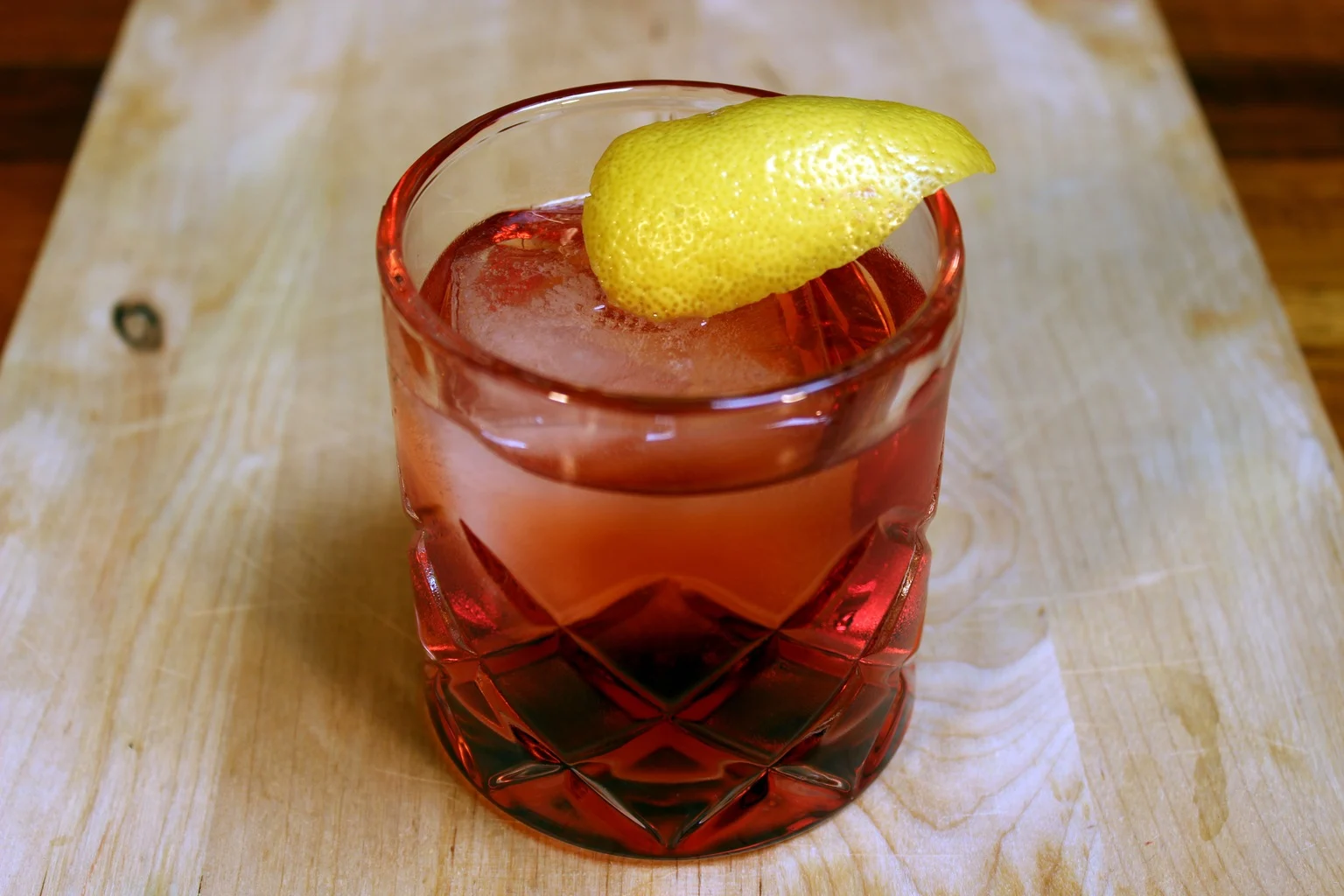
Each classic trains a different gin judgment — tonic reveal, vermouth structure, bitter equal parts, and volume.
The big idea
Each classic trains a different gin judgment.
01
G&T — tonic and ice reveal
Four glasses that teach the category
01
G&T
Packed ice and cold tonic reveal the botanical bill — they do not hide a soapy one
02
Martini
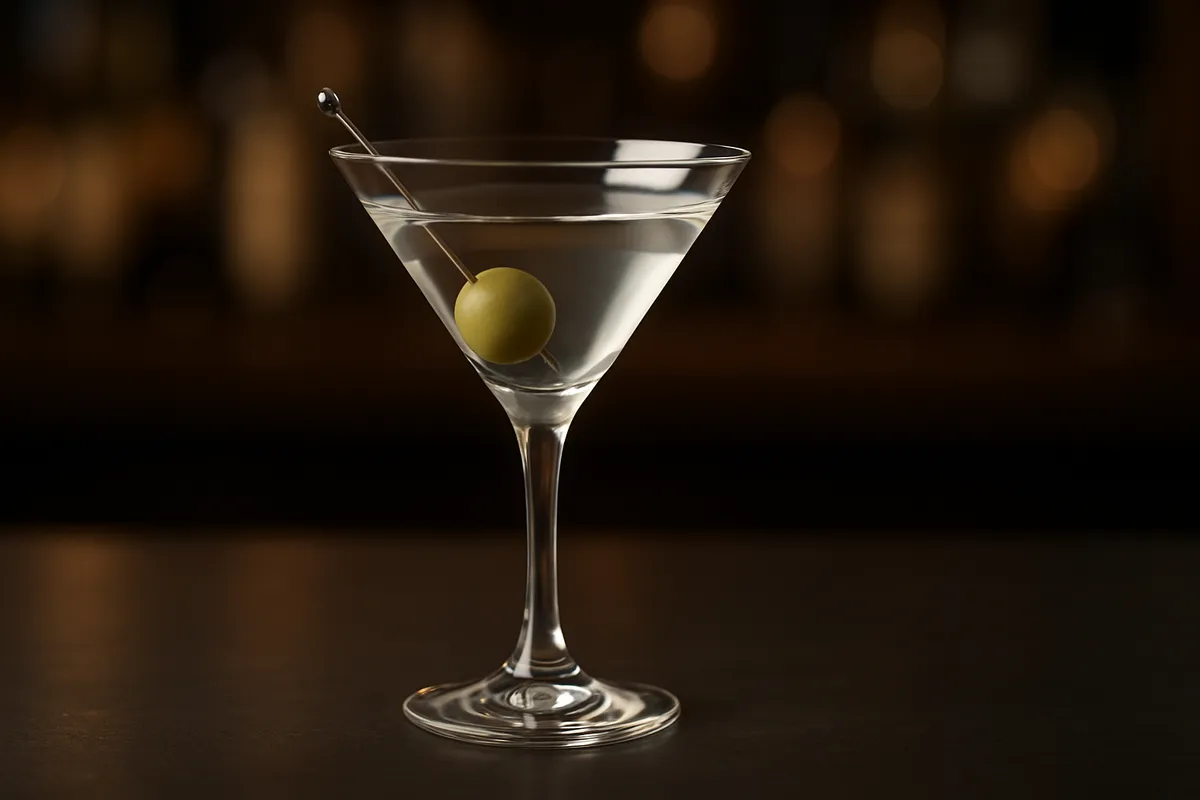
Mostly gin, a measured vermouth — juniper and structure, not cologne
03
Negroni
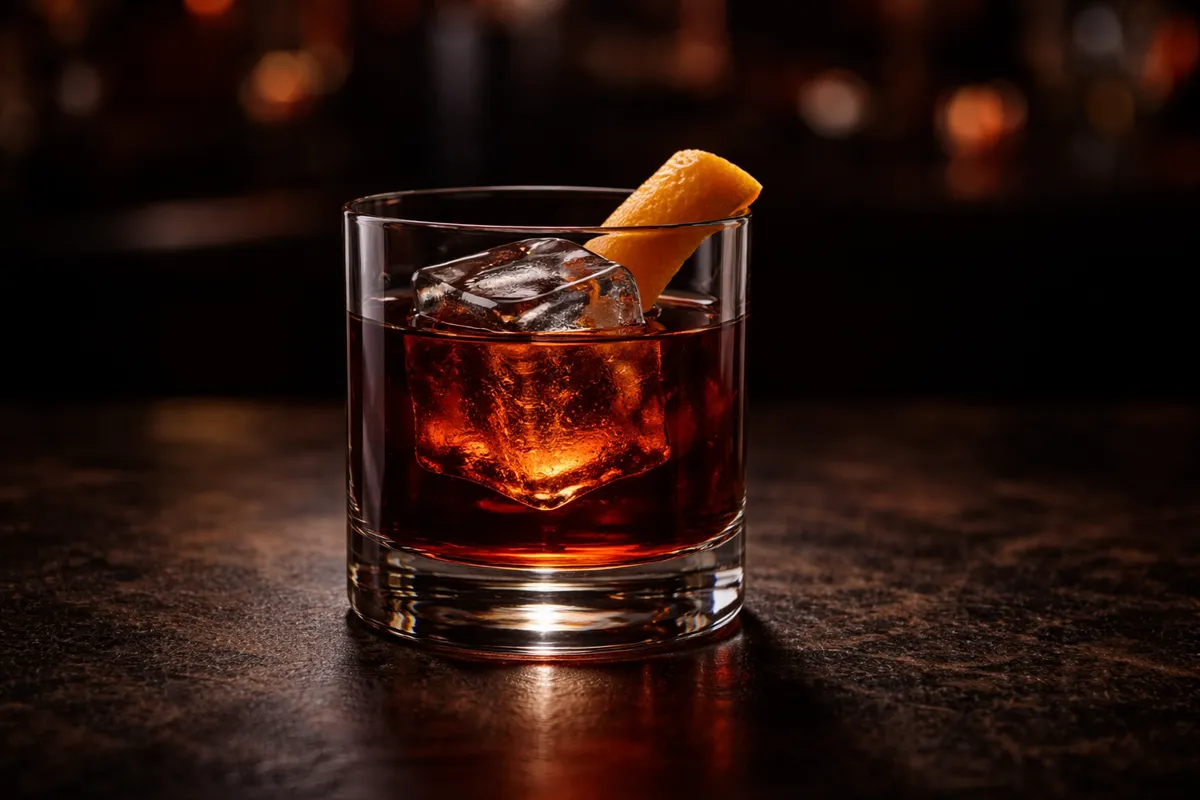
Equal parts gin, Campari, sweet vermouth — the gin must still read
04
Last Word
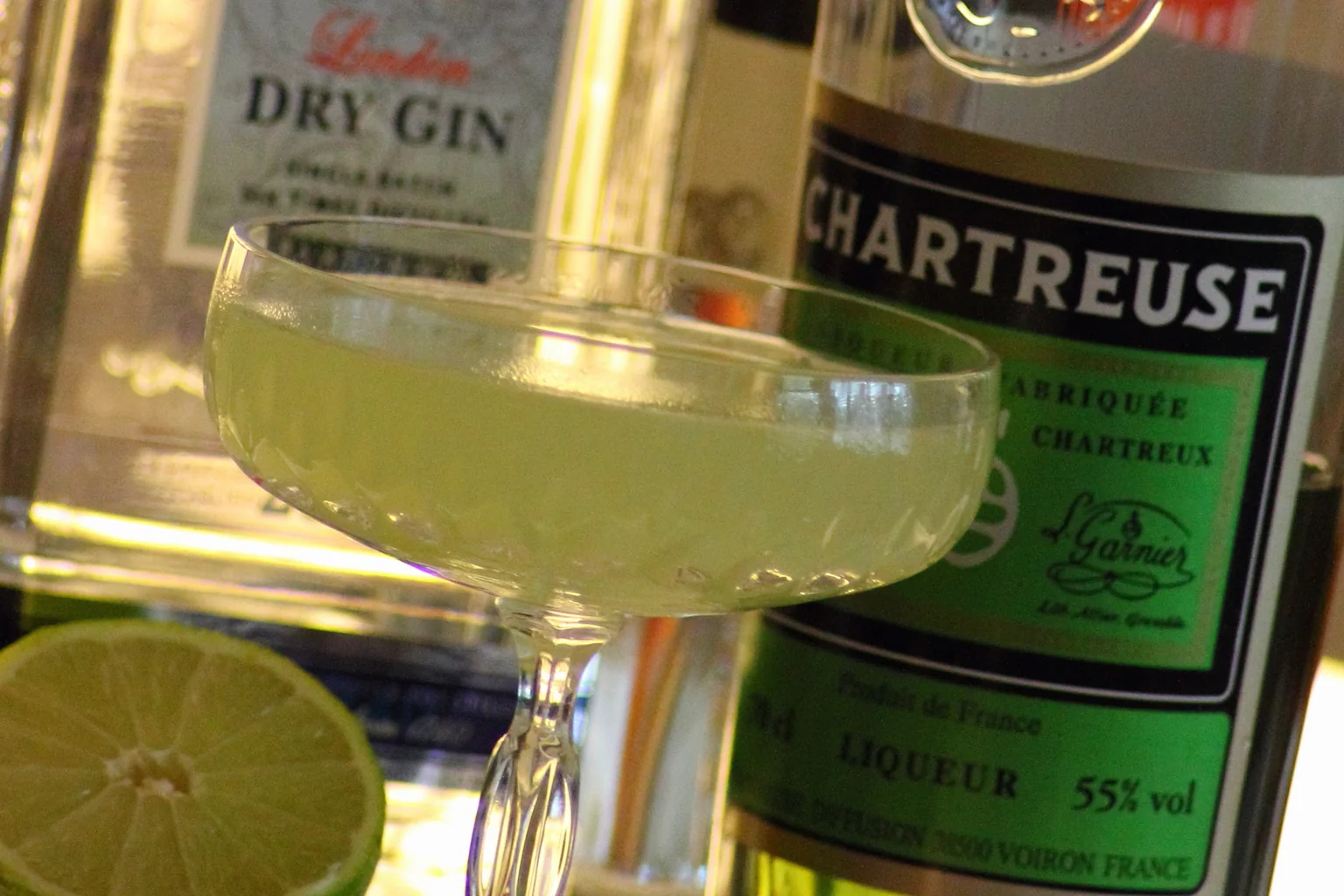
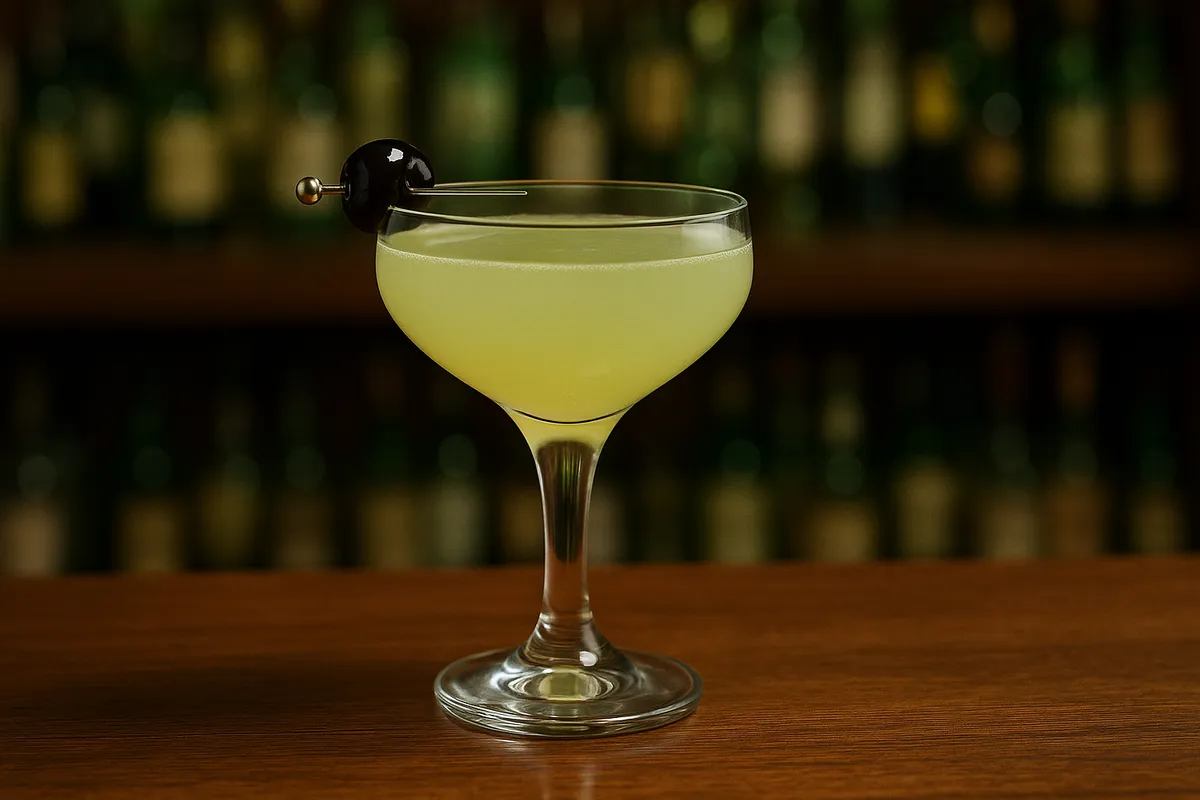
Equal parts gin, green Chartreuse, maraschino, lime — volume is allowed
Default: Beefeater or Tanqueray. Packed ice, fridge-cold dry tonic last, a brief stir. Tonic is a bitter lengthener. It shows the botanical bill; it does not hide a soapy one.
Hendrick’s is an honest G&T pour if you want cucumber and floral — match it with a leaner tonic. Quinine bitterness and sweetness vary by tonic brand; taste the soda alone once so you know what you are lengthening with. Warm tonic and three cubes go flat in two minutes — that is service, not a bad gin.
02
Martini — juniper and structure
Default: Beefeater or Tanqueray. Mostly gin, a measured vermouth, stirred cold. You are tasting the bottle. Juniper and a dry spine keep the drink from turning into perfume water.
Hendrick’s, or another soft floral contemporary, can taste like cold cologne once the vermouth is gone. Fridge the wine. If tonight’s Martini is dusty, open a fresher vermouth before you change the gin.
03
Negroni — gin must still read
Default: Beefeater or Tanqueray. Equal parts gin, Campari, sweet vermouth. Campari is loud. Choose a gin that still tastes like gin after the bitter and the wine.
Hendrick’s — or another contemporary you only love with tonic — is the usual reason a home Negroni tastes like Campari and regret. That is a job mismatch, not a bad bottle.
04
Last Word — a loud template
Default: the same London dry, or step up density with Plymouth Navy Strength or Tanqueray export strength (~47%). Equal parts gin, green Chartreuse, maraschino, lime. Shaken. The template already has volume.
A shy, floral 40% gin will taste like herbs and lime with no spine. This is the lesson where a louder bottle is not a mistake — volume after three quieter judgments (highball reveal, vermouth structure, bitter equal parts).
Tip
When the recipe only says gin
Pour Beefeater, Tanqueray, or another juniper-led London dry unless the notes say otherwise. Highball: almost any good gin if the tonic is cold and the ice is packed. Martini and Negroni: structure first. Last Word: volume is allowed.
Bols Genever and Hayman’s Old Tom keep their own named drinks. If the spec only says gin, stay on London dry unless you chose the Hendrick’s G&T fork.
06
Common mistakes
One bottle used for every gin drink → pick a default per classic: Beefeater / Tanqueray for Martini and Negroni; Hendrick’s is an honest G&T fork; navy or export strength only when the Last Word wants density.
G&T dies in two minutes on a solid London dry → pack the ice and fridge the tonic before you change Beefeater or Tanqueray.
Negroni tastes only of Campari → switch to a juniper-led London dry (Beefeater / Tanqueray or similar); Hendrick’s and other soft contemporaries often disappear in equal parts.
In the glass
Practice these
Read the drill, then make the drink once focusing on that cue — repetition beats another paragraph.