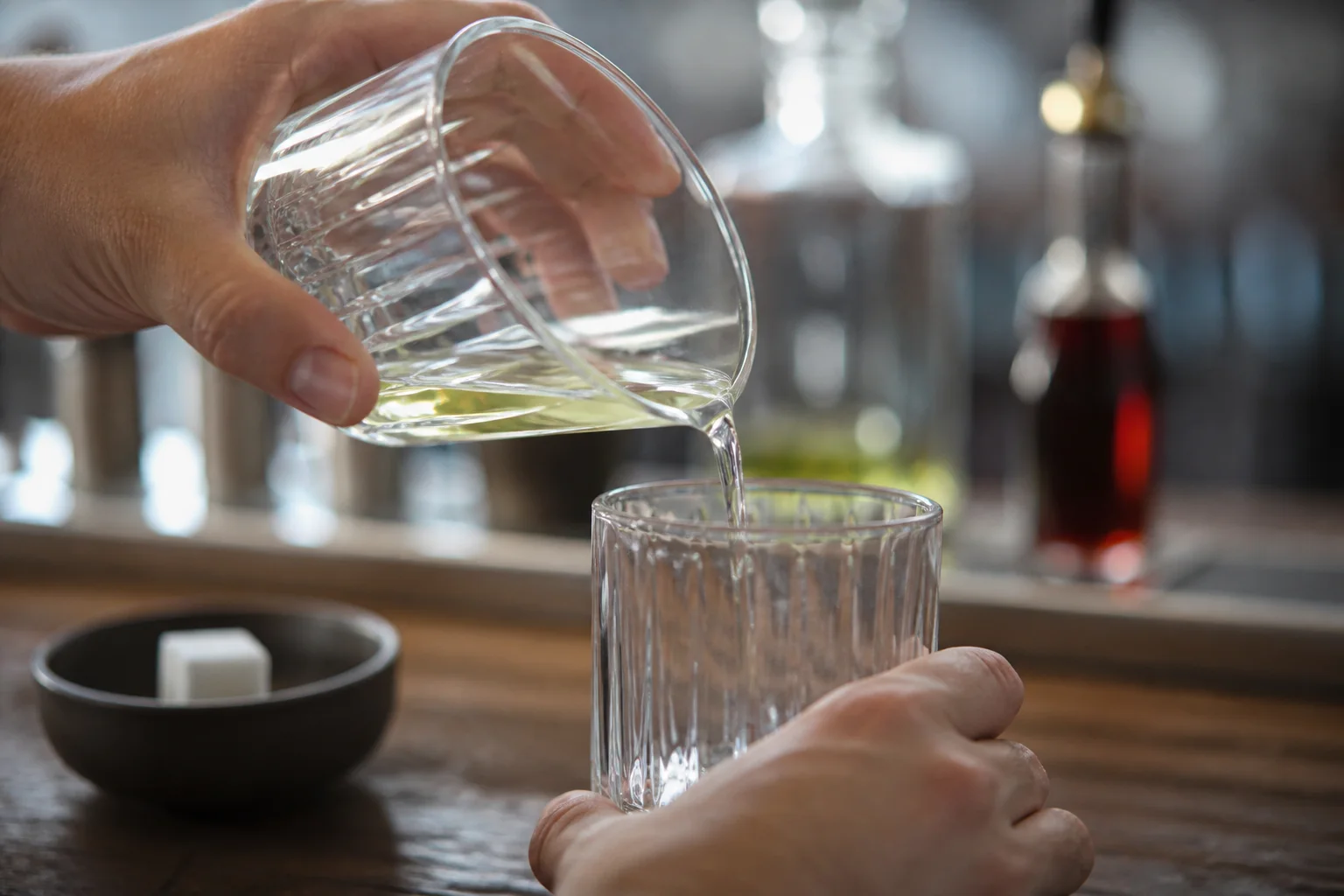
Rinsing a glass with absinthe
Learn library

Technique

Rinse

Coat the inside of the glass with a small amount of spirit (often absinthe), then discard the excess.

The big idea

A rinse coats the glass with a few drops of a loud spirit — aroma and a light accent — then the excess goes down the sink so it doesn’t become the drink.

5 things to remember
  1. Pour a splash, tilt to coat, discard the extra.

  2. Absinthe, peaty Scotch, and mezcal are the usual rinses — intense bottles used as perfume.

  3. Chill the glass first so the film clings instead of pooling.

  4. If you can taste a full measure of the rinse, you didn’t dump enough.

  5. A rinse is not a float; it lives on the glass, not as a layer on the liquid.

When to rinse

Rinse when a small amount of a forceful spirit should frame the drink — Sazeracs (absinthe), some smoky variations (mezcal or peat), the occasional bitter rinse. You’re seasoning the glass, not adding an ingredient to the mixing tin.


Coat, don't drown

Coat, don't drown
  1. Pour a splash in glass

    A barspoon or two of absinthe, vermouth, or liqueur.

  2. Tilt to coat sides

    Roll the liquid around the inside of the glass.

  3. Discard excess

    Dump what doesn't stick — you want perfume, not volume.

Add a teaspoon or so of the rinse spirit to a chilled glass. Tilt and roll until the inside is coated. Dump the excess (or, if you prefer a slightly louder glass, leave a few drops).

Strain the finished cocktail into that glass. Garnish as written — often an expressed peel on top of the rinse aroma.

Common mistakes

  • Leaving a puddle of absinthe in the glass turns a Sazerac into an anise bomb.
  • Rinsing a warm glass makes the film slide into a pool.
  • Measuring the rinse into the mixing glass with the other ingredients is a different drink — not a rinse.