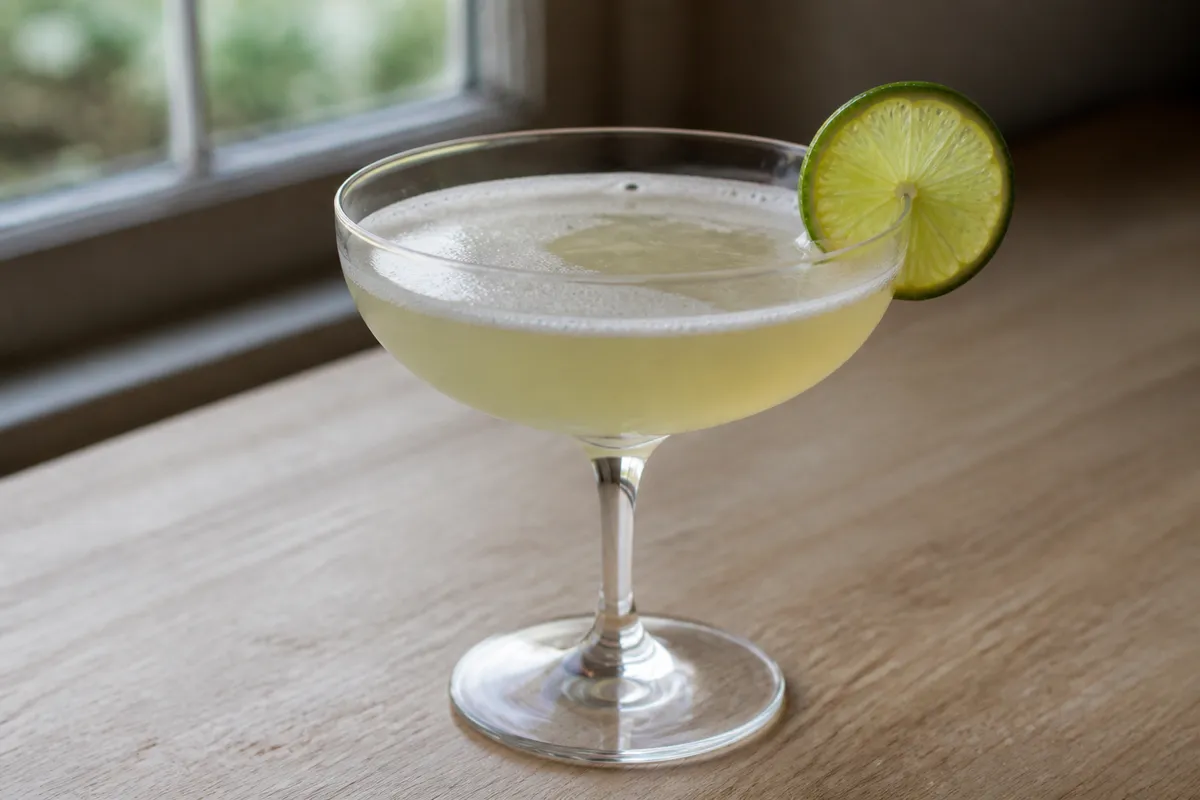
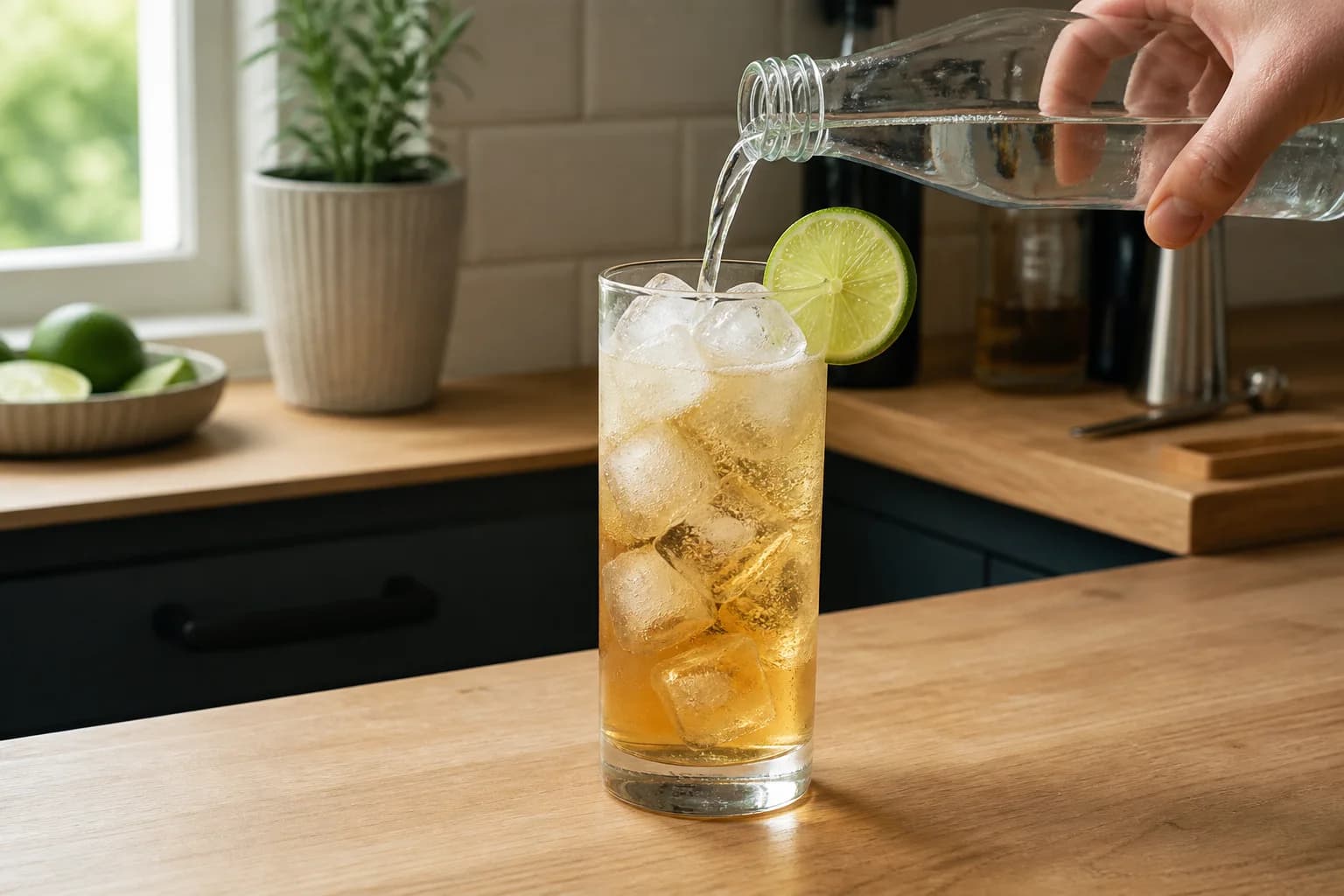
Cold is heat leaving the drink; dilution is melt. Match ice size and hardness to the method — stirred, shaken, or built.
The big idea
Treat ice like juice. Large hard cubes for stirred drinks; packed ice for shakes and highballs; crushed only when texture is the point.
Keep these
4 things to remember
01
Pack the tin or mixing glass — sparse ice melts fast and never gets the drink cold.
02
Soft freezer ice over-dilutes stirred drinks before they’re cold; use harder cubes or taste sooner.
03
When the shaker tin hurts to hold, stop — extra time is mostly water.
04
Crushed ice is for swizzles and juleps, not every highball.
The rule
Treat ice like juice
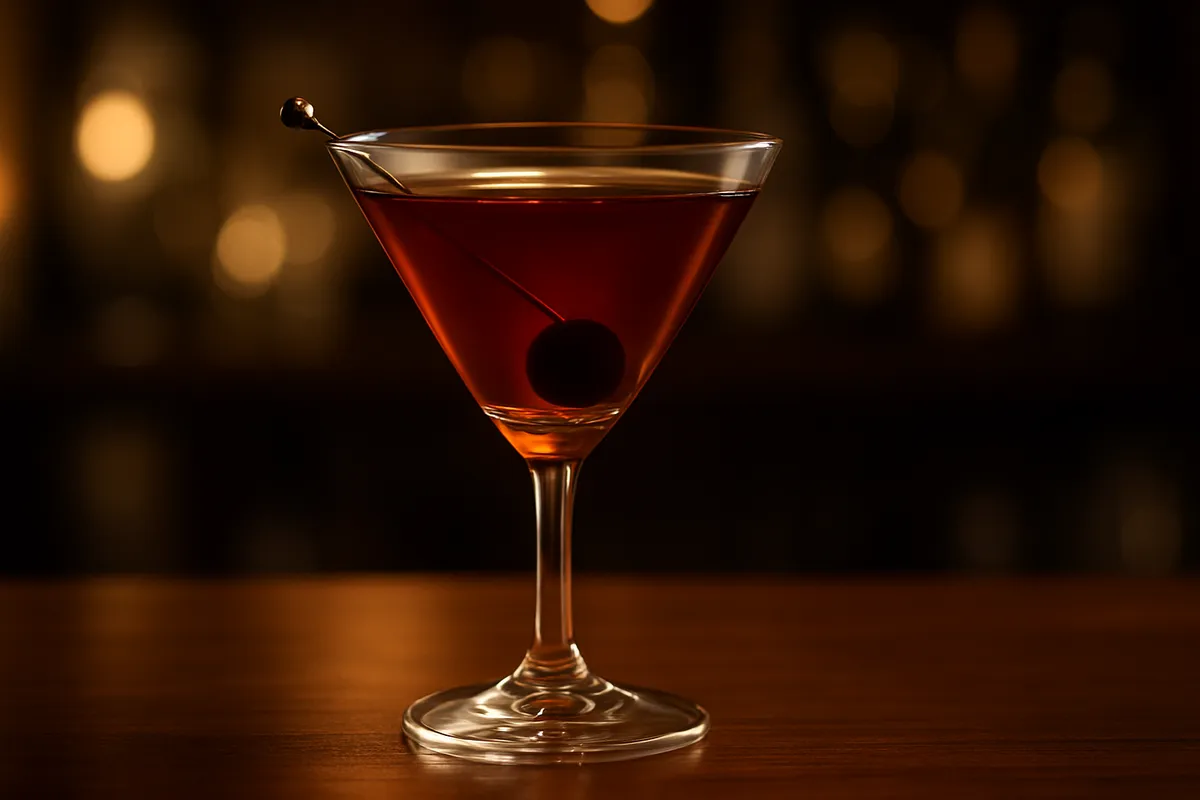
You wouldn’t use week-old lime without noticing. Wet, hollow freezer cubes are the same kind of ingredient failure. They dump water before they dump cold — why home Manhattans taste thin and home Daiquiris taste weak even when the bottles are good.
Clearer, denser cubes hold more cold per cube (less trapped air), so stirred drinks can get cold without turning into whiskey-flavored water.
02
Match the ice to the method
Size changes melt — pick on purpose
01
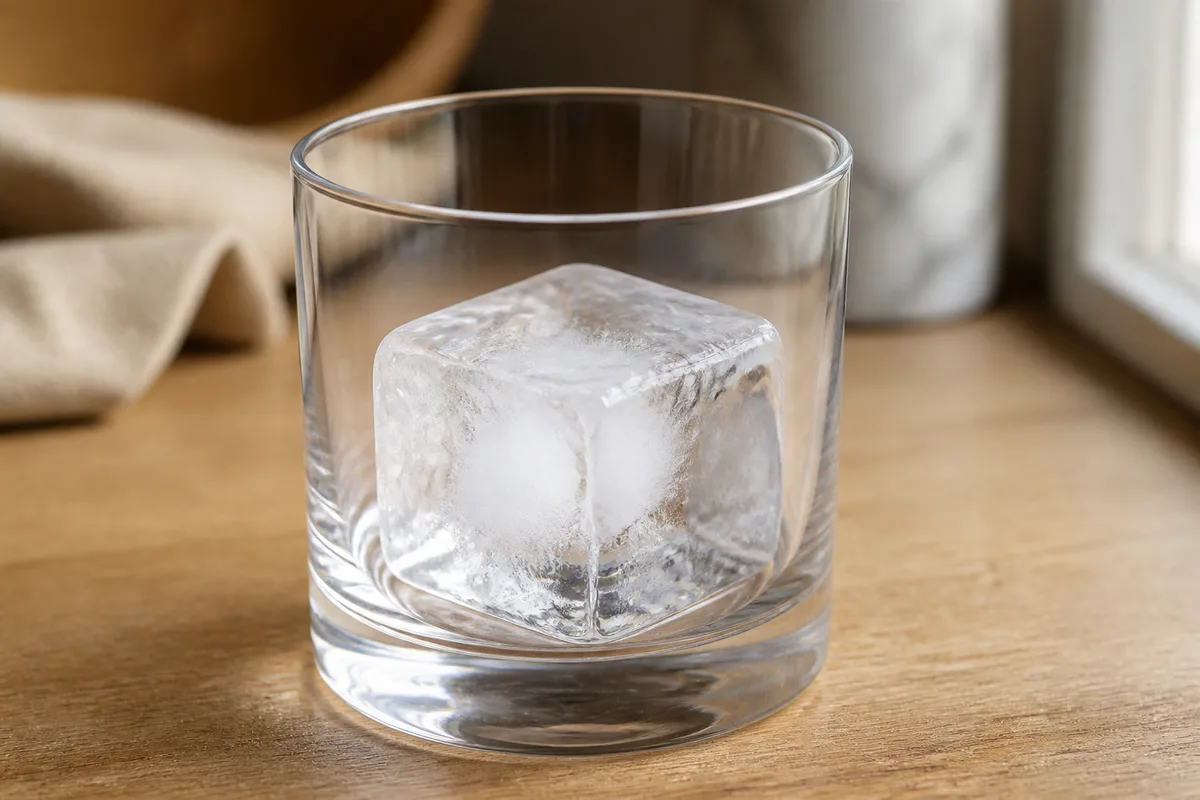
Large cube
Slow melt · stir, rocks
02
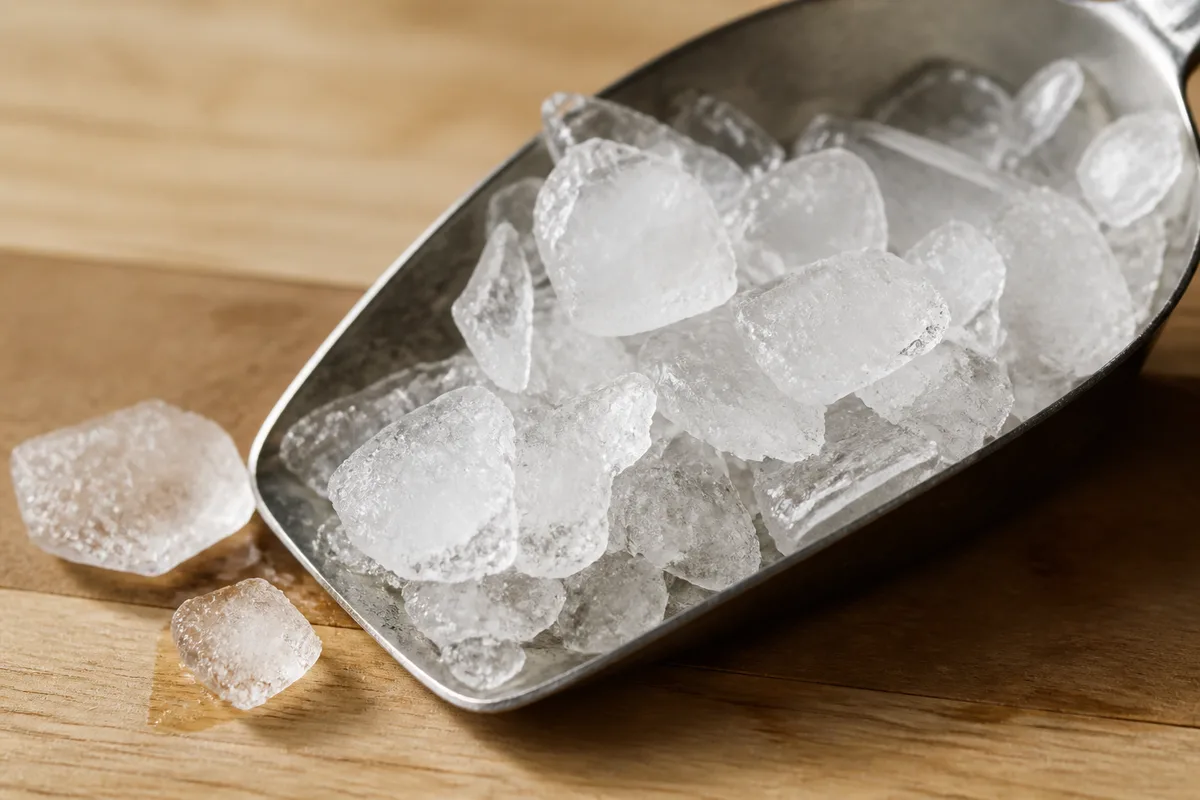
Cracked
Fast chill · hard shake
03
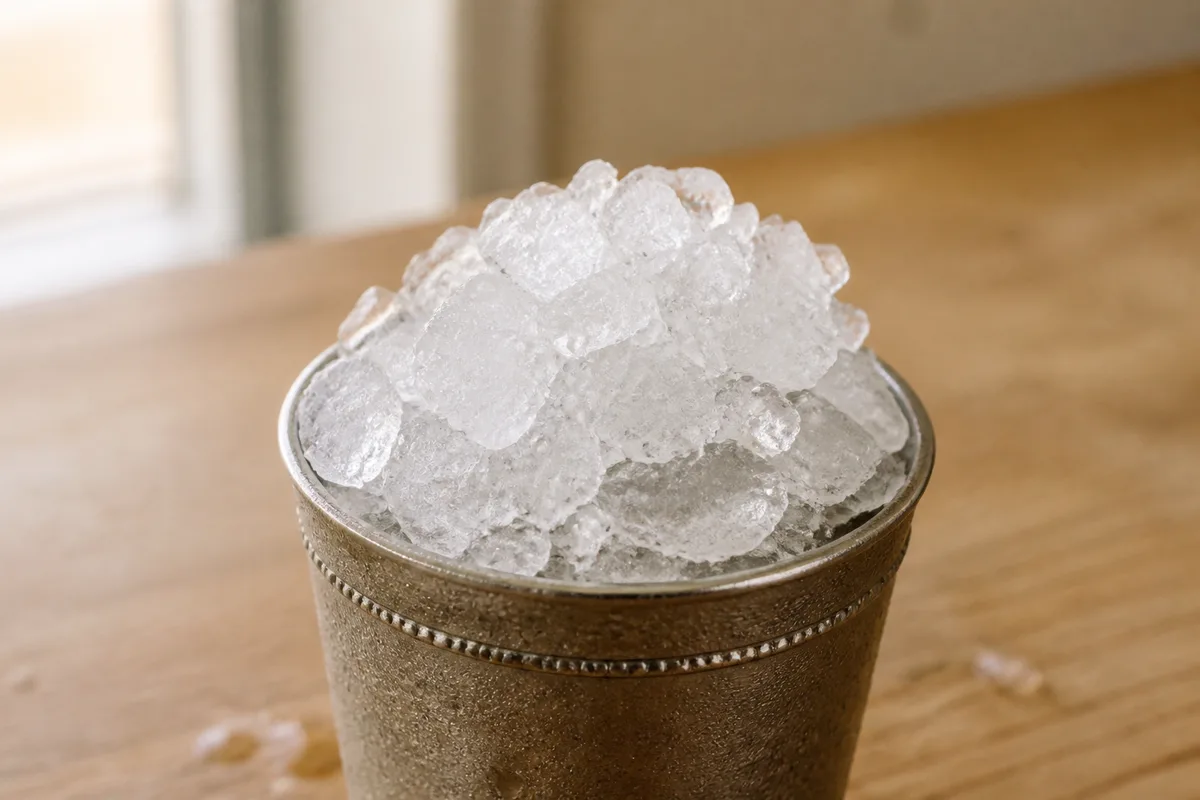
Crushed
Texture · swizzle, julep
Stirred spirit-forward drinks want large, hard cubes and a full mixing glass. Shaken sours want a packed tin — large, hard cubes chill without over-diluting; smaller or cracked cubes are a fine home substitute when the freezer only makes brittle ice.
Built highballs want the glass packed so the drink stays cold while you sip. Crushed ice belongs in swizzles and juleps, where the texture is the point and the frost on the glass is your timer.
Tip
Taste, don’t worship the clock
Most useful cooling happens early. After the tin frosts and hurts to hold, you are mostly adding water. Soft home ice reaches that over-dilution point faster than bar ice — shorten the shake if the drink tastes thin.
For stirred drinks, taste: hot alcohol means keep going; watery means you overshot. Note your ice and your time so the next round isn’t a guess.
Tip
Surface area is the hidden spec
Melt rate tracks surface area. One big rock in a rocks glass keeps an Old Fashioned drinkable. The same ounces of pebble ice would wash it out. In a shake, high surface area is useful — you want the drink cold now, then out of the tin.
If your freezer only makes brittle cubes, crack them for the shaker and save the best-looking ones for stirring — or buy a bag of denser ice for Manhattan night.
05
Common mistakes
Half-empty shaker or mixing glass → pack it.
Sparse ice melts too fast and the drink never gets cold.
Warm soda over two cubes → fridge the lengthener and fill the glass, or the highball dies in two minutes.
Stirring a full minute on wet freezer ice → use harder cubes and taste for silk; stop before it turns thin.
In the glass
Practice these
Read the drill, then make the drink once focusing on that cue — repetition beats another paragraph.